Railway lubrication: vehicle and infrastructure
In the railway sector, industrial lubricants work in two connected worlds: rolling stock, meaning locomotives, coaches, wagons and multiple units, and the infrastructure, with track and switches. In both cases the aim is to reduce wear and noise without compromising adhesion, which is essential for traction and braking.
The requirements are particular: components are subject to high loads, continuous vibration, seasonal temperature swings and long intervals between interventions. Maintenance follows programmes defined by manufacturers and operators, and the choice of products is normally bound by precise specifications.
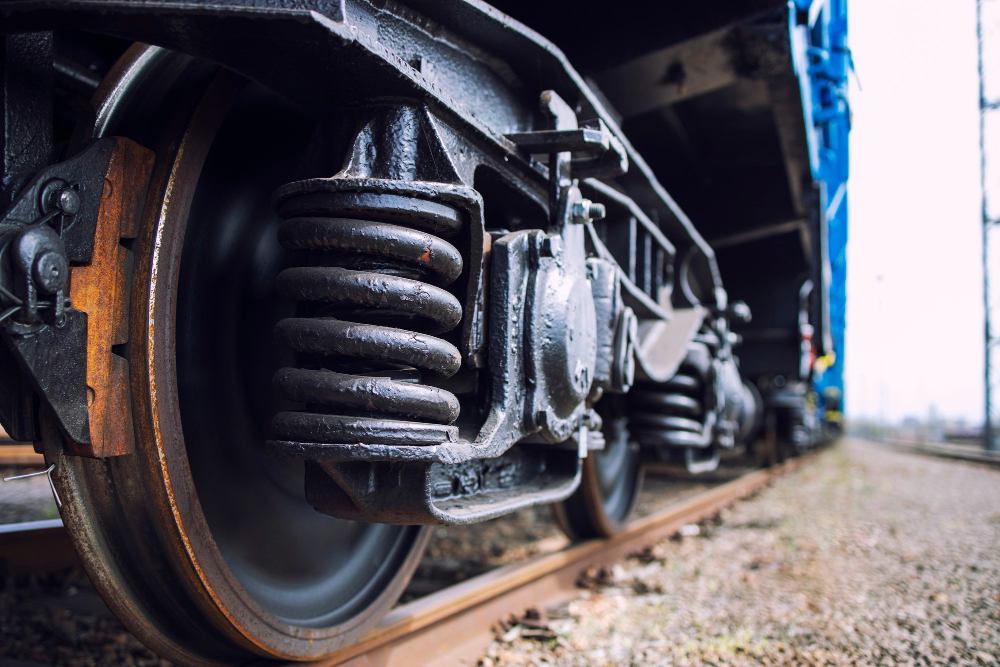
The contact between wheel and rail
When a train runs through a curve, the wheel flange can rub against the side of the rail. This contact causes wear on both components and the familiar squeal in curves. Targeted lubrication of the wheel flange or of the inner face of the rail significantly reduces wear and noise.
Lubrication can be applied by devices installed on board, which deliver small amounts of product to the wheel flanges, or by fixed trackside systems positioned before curves. In both cases it is essential that the lubricant stays on the side of the rail and does not reach the running surface, where it would reduce the adhesion needed for traction and braking.
Friction modifiers
Alongside flange lubricants there are products designed for the running surface, known as friction modifiers: they do not eliminate friction but keep it within a controlled range, reducing noise and some forms of wear without compromising braking.
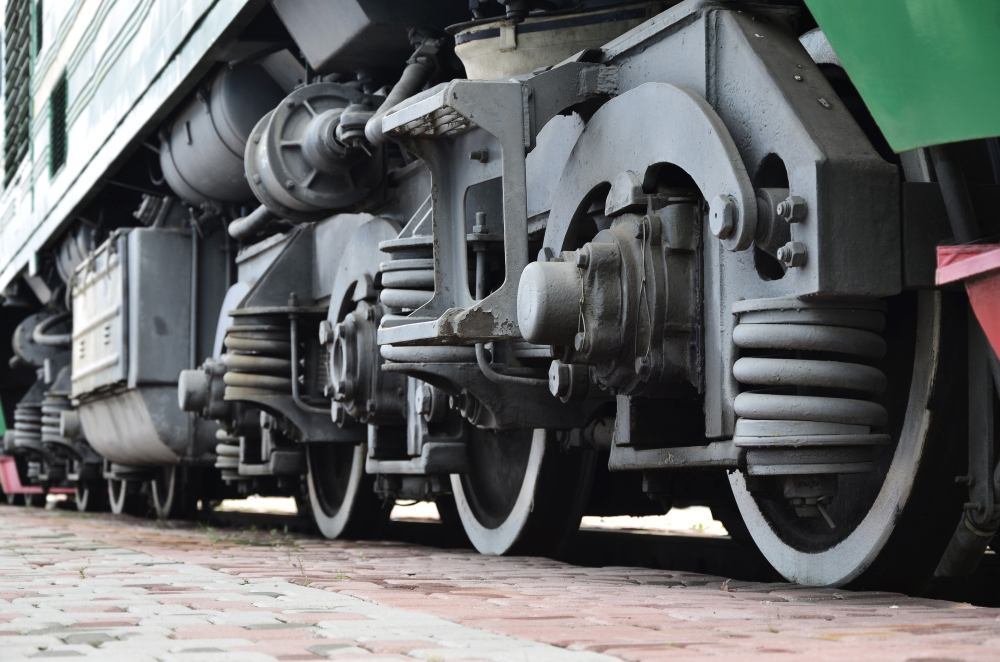
Axle boxes, suspension and traction components
- Axle boxes They house the axle bearings and are lubricated with grease, chosen to withstand loads, vibration and long service intervals.
- Final drive gearboxes They transfer torque from the motor to the axle and use gear oils suited to high loads.
- Traction motors The bearings of electric motors are lubricated with greases suited to their rotational speeds and operating temperatures.
- Couplings and buffers Couplers, buffers and sliding parts require greases with good water resistance.
Engines, compressors and transformers
Diesel locomotives and railcars use large-displacement diesel engine oils, chosen according to the manufacturer's instructions. The compressors that produce air for the braking system and pneumatic services require specific compressor oils that resist oxidation and the formation of deposits. In electric traction vehicles powered by alternating current, the on-board transformer contains an insulating fluid that also provides cooling: it is a product with dielectric properties, to be managed with specific procedures.
Switches and infrastructure
In switches, the moving parts slide on baseplates that have traditionally been lubricated to ease movement and reduce the effort required from the operating mechanisms. Some installations use plates with low-friction surfaces that reduce or eliminate the need for lubrication. Since products applied to the infrastructure can disperse into the ballast and the ground, low environmental impact lubricants are often preferred for these applications.
Scheduled maintenance and documentation
In the railway sector, traceability is essential. Every lubrication task is linked to a maintenance plan, with approved products, defined quantities and intervals, and is recorded. Changing a product is not the workshop's free choice: it requires a technical assessment and often the approval of the manufacturer or the entity in charge of maintenance.
Safety
Working on the track and near overhead lines
Work on the line and on vehicles in service may only be carried out with authorisation and the required protection, following the infrastructure manager's procedures. On electrified lines the overhead contact line is a lethal hazard even without direct contact. In depots, spilt oil makes inspection pits and walkways slippery: it must be cleaned up immediately with absorbent materials.